Do you ever feel like life is passing by too quickly and that you can’t keep up? Have you noticed yourself feeling stressed, overwhelmed, or just plain exhausted from the daily grind? Is it difficult to set time aside for yourself? If so, it may be time to start incorporating some mindfulness and positive thinking into your life.
Mindfulness and positive thinking have become popular topics in recent years as more people realize how much they can help us improve our lives. From reducing stress to improving productivity, these practices come with a plethora of benefits. In fact, there is now a medically recognized intervention call MBSR (Mindfulness based stress reduction) which makes the process very systematic and accessible. However, this is not the only way to practice mindfulness and still get the benefits!
In this post, we’ll explore why mindfulness and positive thinking are important. We will look at how to implement them in your life and what kind of results you might see from doing so. We’ll also discuss potential challenges that come with making these changes and offer tips for overcoming them
What are 3 benefits to practicing mindfulness?
- Mindfulness reduces stress. There are countless studies that show how mindfulness reduces stress via multiple nervous system pathways. There is a page dedicated to the practice on the National Institute of Health website. The most obvious effect is the delaying of the amygdalic brain (lower, reptilian brain) and heightened response in the pre-frontal cortex. This basically means our ability to cognitively think before we react improves.
- Mindfulness improves productivity. Often when we feel stressed, it’s because we’re overwhelmed with everything we (think) need to do. This can lead to us feeling scattered and unfocused, making it difficult to get anything done. Mindfulness helps us to focus on one thing at a time, which makes completing tasks much easier and less stressful.
- Mindfulness improves our overall well-being. We can feel a deeper sense of fulfillment knowing that we are present with our experiences. We also enjoy more confidence knowing that we are making the best decisions for ourselves.
- (Bonus)* Mindfulness improves our relationships. When we’re stressed, we often take our frustrations out on those closest to us without meaning to. This can damage our relationships and make them more difficult than they need to be. Mindfulness can help us be more present in our interactions with others and appreciate them more, leading to healthier relationships overall
The difference between mindfulness and positive thinking
Mindfulness and positive thinking are often thought of as being the same thing. However, they are actually quite different. Mindfulness is about being present – in the moment and accepting things as they are, without judgement.
Positive thinking is about looking on the bright side and trying to see the best in every situation. Both mindfulness and positive thinking can be useful in managing stress, but they take different approaches. If you’re feeling stressed, mindfulness can help you accept your feelings and let go of them, while positive thinking can help you find the silver lining in the situation.
Positive thinking is important, but it is also important to remain truthful to ourselves accept feelings and thoughts that don’t always feel good. This is where mindfulness comes in to keep us in check. When we are being mindful, it’s pretty difficult to lie to ourselves or say something is ‘ok’ when we know that we feel like it isn’t.
How mindfulness & positive thinking can change your life
Mindfulness and positive thinking affects every part of our life. Being mindful is the difference between being present with our experiences and being aloof. Most people live somewhere in between that spectrum, but we all know individuals who sit to the extremes of this spectrum (being extremely present, or being completely disconnected).
Improve your physical and mental health
Mindfulness has been shown to have a number of benefits for our physical health. It can help us to manage pain, reduce stress, improve sleep and even boost our immune system. Positive thinking has also been linked with better health outcomes. Studies have found that people who are more optimistic are less likely to die from cardiovascular disease, and that they may even live longer than pessimistic people.
Transform your relationships
When we are mindful, we are more present with our loved ones and can really savor the moments we share together. We are also better able to manage difficult emotions and relationships. Positive thinking can improve our relationships by making us more satisfied with life, which in turn makes us more pleasant to be around!
Impact your work & professional life
If you are struggling with work-related stress, mindfulness can be beneficial in helping you manage it. Positive thinking could give you the extra boost and confidence you need to get promoted or find a new job. Research has demonstrated that optimists are more likely to obtain promotions and be hired. They also tend to experience less burnout on the job. You can read more on how a simple mindfulness practice can be worth millions of dollars to companies that invest in mental health!
It’s all connected! Mindfulness and Positive Thinking Transforms Everything!
Everything in life is connected. I must emphasize the fact that nothing exists in isolation. When our health suffers, our work suffers, and so do the quality of our relationships. The same is true with any combination of those. For example, stress from work can affect our health and relationships. That is why it’s important to be mindful in all aspects of our life.
Challenges to maintaining a consistent mindfulness practice
The biggest challenge in mindfulness is to be consistent with the practice.
It can be difficult to find time to meditate or do yoga every day when we have so many other demands on our time. But if we make the effort to be mindful, even for a few minutes each day, it can make a big difference in our overall well-being.
We have all kinds of misconceptions about what it takes to practice in terms of time and effort. We may think we are too busy or stressed to pause and be present. Or maybe we think it is difficult and again, are too occupied for something like mindfulness. These are just mental blocks.
The truth is that it doesn’t have to take a lot of time, and it doesn’t have to be difficult. Mindfulness can be practiced anywhere, anytime. Make a dedication to spend at least 1 minute in the morning and in the evening to acknowledge how you feel in the moment.
You can also add a statement of gratitude or positive affirmation. Possible examples are: “I am grateful for my experiences.” or “I am mentally resilient.”
That’s all it takes! That is practicing mindfulness and positivity in 2 minutes or less.
Get Started with Mindfulness and Positive Thinking
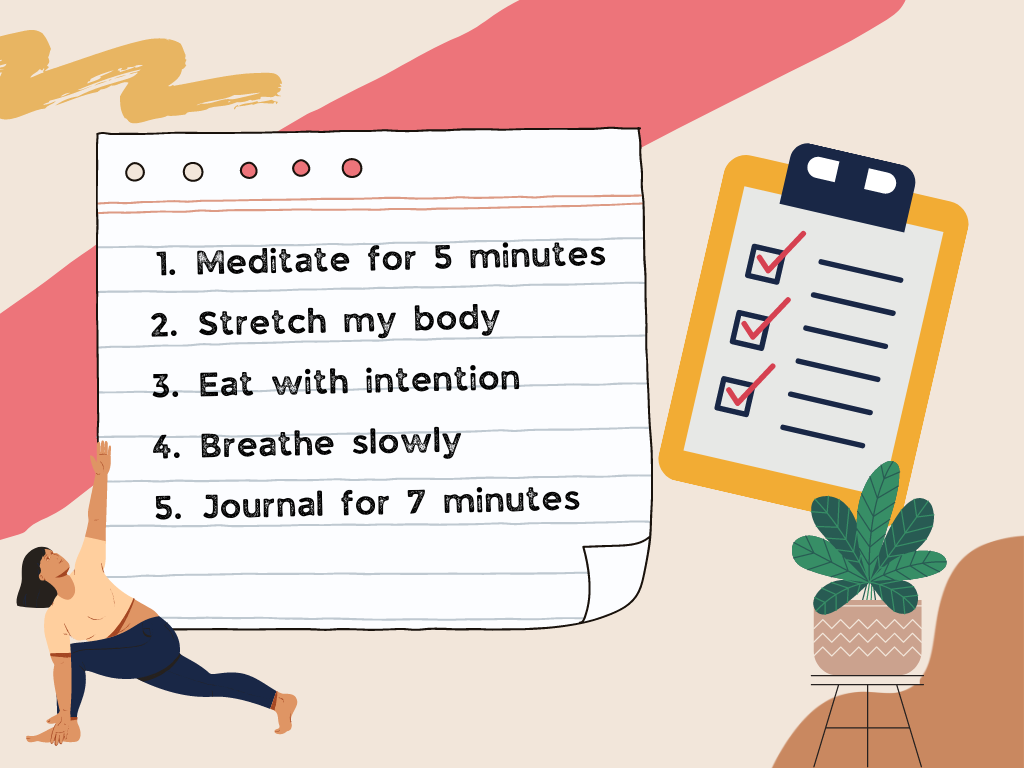
The best way to start is by setting aside some time each day for your practice. If you are able to get overcome the consistency challenge previously mentioned, try this exercise. It can be as short as 5 minutes.
Just find a comfortable place to sit or lie down, and focus on your breath. Don’t try to control your breath, just let it flow naturally. Watch each breath come and go on its own – allowing yourself to be present. If your mind wanders, just gently bring it back to your breath. For more in depth information on mindful breathing, try our free course on the Power of Intention, or check out our Youtube channel.
You may also want to try some mindfulness exercises or meditation practices specifically designed to help you relax and reduce stress. There are exercises with every chapter in our book Transformational Mindfulness: The handbook to self mastery. The book contains everything you need to get started with practicing mindfulness and has an activity that corresponds each aspect of emotional intelligence.