Tagmindfulness

Mental Health Awareness and Screening for Depression

I’m writing this post because in the last week we had depression screening day and mental health awareness day. October is mental health awareness month. However, throughout the year it feels like every day is some kind of focused awareness event, and quite honestly, I can’t keep up. Perhaps it’s just that technology is making all these events easier to document and track or maybe its my involvement in the community expanding my awareness. But the fact remains, it can feel overwhelming sometimes – jumping from one topic to the next – leaving me to wonder if it’s really effective or if we are just constantly going from one to the next, too busy keeping up to absorb the meaning of the day. These days can be good for awareness, but not so much for individuals.

Often times we see the quote “Mental health is health”, which is true, but also health is health. Everything is connected. We need to break out of the silo mentality when it comes to mind body health. Gut health is mental health. Physical health is mental health. Eat healthy or go for a run and you will be in a better state of mind than otherwise. It takes balance to be healthy. We can’t to go to the gym, have a terrible diet, and then expect optimal performance – mental or physical.

Ups and downs are a natural part of life and they serve a purpose. No emotion is inherently good or bad.

Mental resilience, or a strong mind is important to have. For me it is a choice to identify with a disease vs. having a strong mind. Do I get depressed? Sure, I’m more susceptible than most people. Life is not perfect, but that’s a part of it. Sometimes I think it is all pointless. Things don’t always go according to plan. We experience pain. Relationships drift apart. We feel lost. Possessions are temporary. People die. People should be screened if they experience any of this and don’t feel a little depressed. I’m going to do you a favor and say you don’t need to go anywhere. Take a pause and check in with yourself. This is the best screening possible. You know if you feel happy or not – if you feel fulfilled or not, if you feel sad, or stressed, or overwhelmed. And if you’re not sure, then that means it’s time to take a pause and check in. Ultimately it’s up to us to be accountable for our health.

So what do we do? First off, lets not get ourselves more down about feeling down. It is common for us to intensify undesirable emotions because we are so focused on them. We get so focused on our depression or anger that it makes us more depressed or angry! Ups and downs are a natural part of life and they serve a purpose. No emotion is inherently good or bad. Once we accept, that, we can use our emotions to our advantage. For example, feel down/depressed allows for greater introspection – to look within and re-evaluate our needs/actions.

  1. Take inventory
    • Take note of one word describing how you feel right now.
    • (Optional) Do a stress inventory. Stress is the top contributing factor for most chronic disease, immunity, mental health imbalances, and overall well-being. Sometimes we don’t recognize how much stress we are experiencing. This can help to put what we are experiencing in life into perspective.
  2. Practice mindfulness! Gratitude and positivity are two easy exercises. Remember that the mind is a muscle. The more we practice positive thinking, the easier it becomes. When we practice mindfulness it also increases our emotional intelligence and stress management skills.
    • Note down 3 things you are grateful for.
    • Practice re-framing negative thoughts into positive ones. Gratitude and humor are 2 easy ways to do this.
  3. Exercise – This is talked about all the time so I won’t go into too much detail here. Something as little as going for a walk can make a huge difference in how you feel. Do what feels good – yoga, calisthenics, cardio, weights – it all helps to get more blood flowing which means more oxygen and nutrients for the brain and body.
  4. Eat Healthy – Diet is huge but not for the reasons you might think. Yes, you want healthy toxin-free building blocks to support a healthy brain and body. But more importantly the gut produces most of our “happy molecules”, the hormones and neurotransmitters that help us to regulate our emotions and feel good. The gut really is the 2nd brain (or the 1st brain according to some people!)
  5. Find your passion – If you feel like you are not reaching your full potential or unfulfilled in any capacity, on a day to day basis then it means you are not putting energy towards things that make you happy. Find a hobby, join a club, build relationships – do what you need to do to feel fulfilled.

Self-Care Sunday: Taking Time To Nurture Yourself

Have you taken the time to nurture yourself this week? Let’s be honest, in the hustle and bustle of life we tend to leave ourselves behind from time to time. It’s easy to put work, kids, deadlines and family needs before our own. Eventually this leads to burnt out, leaving us tired and empty.

That’s why it’s essential that we tend to our own needs and mental health. Otherwise, we will be pouring ourselves out of an empty vessel. Hence, the title. 

Let’s do a little check-in. Below are some questions to start with: 

  • What is the first thing you do when you wake up?
  • Do you have a morning routine? A ritual?
  • Practical steps that can set up your day for the best possible outcome? 

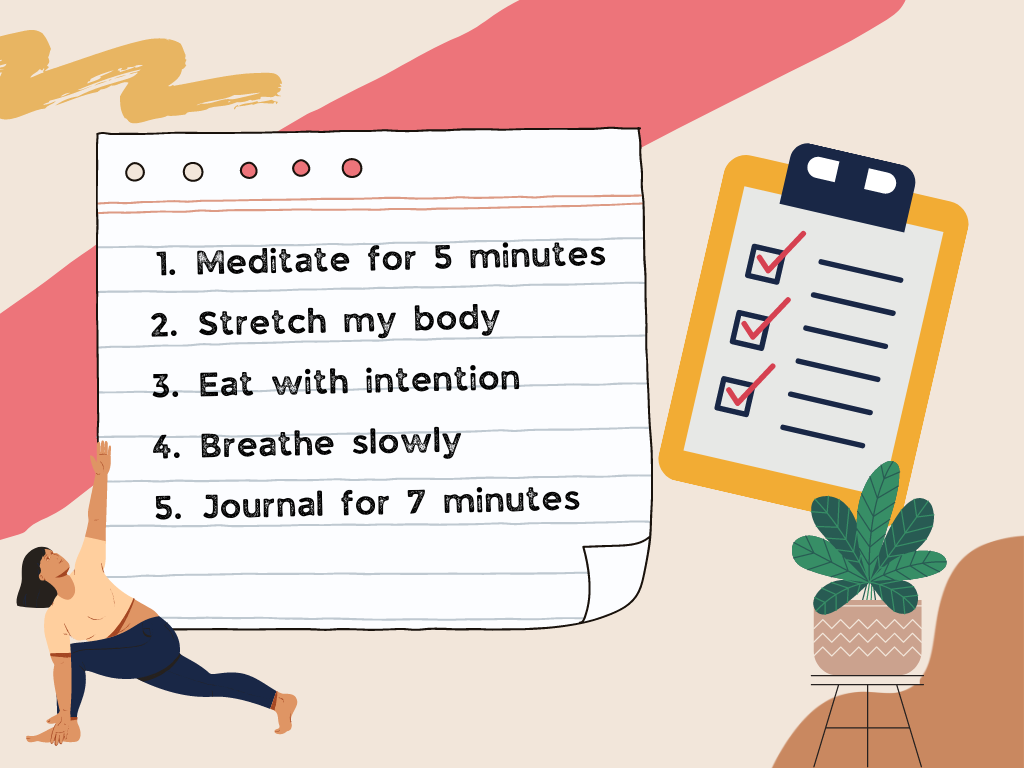
Here are few simple things I do first thing in the morning to make sure I am setting myself up to win:

  • State a positive affirmation (while still in bed)
  • Light stretch
  • Brush my teeth
  • Take a shower
  • Meditate
  • Light yoga (while the coffee is brewing) 
  • Journal ( it doesn’t have to make sense) 

Yes, seriously. I do all of these things within the first two hours upon waking, either before heading to work or getting my day started with my family. 

You’d be surprised at how these common sense and simple things are overlooked and undervalued. 

Choose one, two or all of them and try it on. Simply spend a few minutes on each and see how you feel. 

Take inventory before you go to bed. What worked? What didn’t work? And what can you do differently tomorrow?

Don’t overthink it. It takes daily practice, consistency and a little willingness.  

Trust the process.

Men’s Health Month

June is officially Men’s Health Month. This often means health screenings and education about men’s health related issues. For us this means looking deeper into men’s mental health. Men have different needs than women, including emotional. Here are a couple statistics from the Men’s Health Month website:

  • Currently, men are dying an average of 5 years younger than women and lead 9 out of 10 of the top causes of death.
  • Men are at greater risk for death in every age group.
  • Men have a higher suicide death rate than women.
  • Men account for 92% of fatal workplace injuries.
  • Men do not see physicians for physical exams nearly as often as women and men are more likely to be uninsured.

Having the right tools available to manage stress makes a big difference. Also knowing that using these tools does not make anyone less of a man. Men can meditate, pray, do yoga, tai qi, or anything else that helps to slow down and tune into the mind-body connection. Another big difference in the overall state of mental health for men is a sense of community. That is a tool that many men barely scratch the surface of when it comes to mental health. Men also often feel the need to be “strong” or to uphold a certain image. We need to allow space for men to feel comfortable with being open and vulnerable – to simply discuss deeper things.

National Men’s Health Week (NMHW), will be June 11th – June 17th. Take this time to support yourself or be a support for men in your life. Remember to take time for self care, to check in with how you are feeling, and to allow yourself to be open with others.

Summer Updates!

Summer is just about here, and with it, a plethora of updates!

First off, June is Men’s Health Month. As a reminder, health & wellness is something that is ongoing for everyone. Many aspects are like exercise or diet – you have to keep up the practice every day. It’s not something we can practice and be done with (Its not like you get fit from going to the gym a few times and then you never have to go again).  We’ll discuss more about men’s health and mental health needs. We also look forward to World Yoga day on June 21st!

Later in the Summer, Jahmaal’s Transformational Mindfulness book will be released! If you haven’t had a chance, visit akash.jah.guide (which will soon be moving to its own page: akash.exchange) to learn more about the cryptocurrency token to support health, wellness, and commodities like food. These are two exciting projects we are excited about as they represent healthy progress in the paradigm shift.

Stay cool out there!

Practicing Mindfulness With Family

Practicing mindfulness has many benefits for all areas of life. It affects physical, emotional, mental, and social well-being. It’s an even more powerful tool when that intention and awareness is shared with others – in this case, our family. A Family that practices mindfulness together, stays together.

A mindful family is:

  • Aware of each other’s wants/needs
  • Emotionally available
  • More likely to take responsibility for how we are feeling
  • Less likely to project negative feelings onto others

Cultivate Curiosity

Mindfulness can be a new and odd subject to those who are unfamiliar. To avoid awkward interactions like in the comic, we want to introduce mindfulness in a way that instills curiosity. Questions that may get others to be curious about mindfulness are:

  • Are you present?
  • How do you feel right now? Do you want to change anything about that?
  • Have you set an intention (for the day/activity)?
  • What do you think of taking a few minutes to be mindful with ourselves and each other?

Starting a Practice

A family that practices mindfulness together, stays together.

Start Small – try a short mindfulness minutes activity and reflect on the experience as a group (perhaps before/after a meal). Most of our mindfulness activities include the following steps which can be used as a basis for your own activity!

  1. Close your eyes. Take 3 deep breaths in through the nose and out through the mouth.
  2. Name an emotion – what word best describes how you feel right now? Take note of it and let it go for now.
  3. Observe the senses (can be just 1 sense: i.e. Listen to the sounds around; or engage each of the senses if time allows: hearing, smell, taste, touch, sight).
  4. Observe the breath – Let it happen naturally without thinking about it.
  5. Set an intention. If nothing specific comes to mind, set an intention to be present and express gratitude throughout the day. The more you are specific about your intentions, the more likely you are to act on them without even thinking about it. We subconsciously achieve our goals or desired state of being.
  6. Name an emotion – what word best describes how you feel right now? Take note of it. Open your eyes.

Discuss your experience with your family. Here are possible discussion questions to get you started.

  • How do you feel? Do you want to change that? Remember we can hold on to, or let go of any emotion. It’s a choice.
  • Especially with family, be accountable for your own emotions. Don’t use crutches or deflections such as “I feel like you…”, or “You made me feel…” Own your feelings.
  • What are you working on?
  • Do you need support?

Try this activity with your kids, parents, spouse, or close friends. It is a great way to connect and share perspectives.

What’s the ROI on Mindfulness?

Mindfulness – What’s it worth? With busy schedules, taking time out of our day to practice mindfulness may seem counterproductive. The key is that practicing mindfulness improves everything we do. Mindfulness helps us to be at peace. Among many benefits, it helps us focus, increases productivity, reduces stress, improves the immune system, and reduces risk (physical and emotional) by virtue of being more aware.

Until recent years the benefits of mindfulness were not well tracked. As stress and distractions become more prominent in an overstimulated world, we are realizing that there is a real dollar impact of mindfulness (or lack thereof). We are now starting to see how mindfulness is connected to everything we do. The simple explanation is that by letting go of stress, we can process more of our experiences through the rational thinking part of our brain and less through the instinctive/reactive regions. We literally become more mindful and experience more moments of our life.

90-95% of participants in our mindfulness sessions reported a reduction in stress and an improvement in mood.

Insurance companies are realizing the importance of mindfulness. Aetna discovered that they earn $3000 more per employee (by gaining about an hour in productivity each week) and reduced expenses by $2000 per employee (yearly). SAP, a German technology has started rolling out mindfulness programs for its employees and noticed an ROI of 200% per employee.

The numbers are there for those who need to see them. My own work at JAH Advisory has found even more enlightening results. While practicing mindfulness with children and adults, we have made some interesting observations. Everyone (about 95% of participants in mindful sessions) reports reduced stress and an improvement in mood. Students are more engaged throughout the day. Relationships improve – between peers, teachers/students, and leaders/team members, and families. I can’t list all the amazing changes that a mindfulness practice can bring about.

Classroom Mindfulness Image

That’s the truly amazing thing. I already knew it, but seeing it in practices shows that the real value of mindfulness is priceless. You can’t measure the final impact on another person’s life and the positive impact they may have on others and so on. It is priceless. We can transform lives and create ripples by simply being aware. So remember to stay present.

It’s Never Too Late

Have you ever heard anyone talk about their health as if they are stuck and can’t improve? I teach yoga and too often do I hear “I’m not flexible enough for that.” or “I’m too old for that.”

I’m not just talking about yoga here. I’m talking about life, health, relationships, goals, and anything else where self-limiting beliefs might show up.

Well, there’s good news! It doesn’t matter how old or flexible you are – you can still practice yoga. In fact, we are capable of much more than we think. All it takes is the right intention and the openness to the possibility of “success” whatever that looks like to you. We have to believe – and I mean truly believe on a deep subconscious level – that we can accomplish whatever it is that we set out to do. Otherwise, you fail before you start.

So I’m not just talking about yoga here. I’m talking about life, health, relationships, goals, and anything else where self-limiting beliefs might show up. It’s never too late to work towards our goals. In fact, if you haven’t started already, NOW is the best time to start! Whether its running marathons, saving money, mending broken relationships, or simply living well – it is never too late to start!

Remember, everything works with patterns and repetition. The more you stretch and exercise, the easier it will become. In fact, the more you do anything, the easier it becomes for your body and brain! At first a new activity may feel difficult or awkward – and we may even want to sink into old habits. With practice, the pattern leaves more of an imprint on our brain and body, and it becomes easier.

Examples:

  • The more you eat healthy, the easier it becomes.
  • The more you practice eating out of stress, the easier it becomes.
  • When you relax more frequently it becomes easier.
  • When you practice self-doubt, it becomes easier.
  • When you practice positive affirmations, they become easier.

Some Hard Facts – Don’t Let Them Scare You!

  • Children are like sponges. It’s much easier for them to adopt new habits and behavior patterns than adults, but we can still do it! Our brains work similarly with the main difference being as adults, its filled with so much that we have to ‘overwrite’ old patterns to save new ones.
  • We can practice training the body and mind to its youthful capacities.
  • Believe in yourself! You can do anything you put your mind to!
  • Never say “It’s too late!” You are always capable of improving!

Are You ‘Too Busy’ To Relax? Busting 3 Myths About Relaxation

Remember to relax! It’s easy to get lost in the sauce. Too often do we get caught up with the motions of daily life that we forget to slow down and take time to check in with ourselves. We go through the day picking up tension as we go and when we get home from work or school, we keep going. It’s easy to go on to the next thing without taking a pause – taking a second (or 60) to enjoy your breath. Instead, we hold on to much of the stresses, static, and noise that we experience daily (think about a time when someone close to you had a bad day and took it out on you). We forget to relax and simply be. Thankfully, it’s also easy to take that pause and find stillness within – even for a few moments amidst chaotic life.

“When you take it easy, the next minute will find that you are happy. We all have problems. Life happens, and we move through it.”

Sadhguru

Relaxation Myths

  • I’m too busy to relax – This is simply not true. It just takes a minute. The thing about practicing relaxation is that it becomes easier the more we do it – just like any other muscle or habit. This means that we can relax faster (as odd as it may seem to relax quickly). No matter how little practice you have, 60 seconds of intentional relaxation is infinitely better than none. So if you have a busy schedule try a short routine that you can practice frequently.
  • I relax when I watch TV (or other activities – e.g. play video games) – This is probably the most common relaxation myth. We think we are relaxing when we engage in non-physical activities (like watching TV) but the nervous system is still engaged. We have to remember that just by thinking about something, we create the same responses in the body. That’s why we hold our breath or our heart beats faster when we watch an intense action scene in a movie.
  • It’s hard to relax – This might be the most believable of the myths. The thing is, it doesn’t take much active effort to relax. By definition, relaxing means to let go of tension – we are actively dis-engaging from physical and mental activity. That’s where it’s easy to get caught up. When we think about relaxing, we think about it too much which puts us in an engaged state. We put too much effort and work too hard for something that is actually effortless. All it takes is to be present and aware. The trick is to let go of control. This is what it looks like in practice: Bring your arms to your sides. Take a deep breath in, and make a tight fist. As you exhale, open your hand, relax your muscles, and let your fingers fall into a natural position. Allow your fingers, hands, and arms, and shoulders to fall towards the ground. If you have surrendered completely and are no longer fighting gravity – Congratulations! You are relaxed. Now do this with your entire body!

When we think about relaxing, we think about it too much… We put too much effort and work too hard for something that is actually effortless.

Jahmaal Hays

How to Make Relaxation A Part of Your Daily Life

We can use simple routines to bring presence and peace into our daily lives.

Morning rituals

  1. Allow yourself at LEAST 30 minutes without screen time (no smartphone or tv). This minimizes the stimulation to the brain and nervous system. When our nervous system gets stimulated in the day time, it is harder to settle back down.
  2. Take 1-5 minutes to do the relaxation check-in below.
  3. Notice how you are feeling (and if you want to continue the day with that feeling), and set an intention for the day. With this practice, we can let go of tension/baggage from the previous day and move forward with mindfulness.
  4. I recommend adding a physical activity and mental activity to the morning ritual. I practice yoga and sudoku as a part of my routine. That way I can engage my body and mind in a healthy way, without creating a distracting environment (e.g. Facebook or YouTube).

60-Second Relaxation Check-In

  1. Close your eyes.
  2. Take a deep breath in, and out, then breathe normally. Watch the natural rhythm of your breath.
  3. When your breath slows down, bring your awareness to each of the senses 1 by 1.
    • Start listening to the sounds around you
    • Then notice the smells and tastes
    • Notice the weight of the body and let it sink in with gravity.
    • Notice the thoughts, images, and words that pass by in the mind.
  4. Bring your attention back to your breath, and set an intention for the rest of the day or your task at hand.

Get Help!

If you’re finding it difficult to slow down and cultivate peace, then reach out to someone! Ask a friend or family member to hold you accountable to your relaxation routine or practice with you. And if you want even more guidance, contact the expert!